Tuesday, 30 April 2013
1920- Evil Returns
1920 Evil Returns was an interesting film for me to watch as it had a whole different take on the classic Horror genre, the way that 1920 confronted love in the film is different to how other horrors confront horrors for example in "The Woman In Black" the main character has lost his wife so seeks out the ghost to prove to him self that there is a life after death. but in 1920 the connection of love seams to run deeper into the life blood of the film, and this is a key convention of Bollywood films and is one of the big contrasts between a Bollywood and Hollywood films, in 1920 the male and female are in a hotel room but rather than having sex the male character walks away, i don't want to say that Hollywood films are all about sex but i feel that if that if two characters in Hollywood film had ended up in a hotel room together the same level of restraint may not have been kept.
1920 is a Horror and keeps to the same conventions as you would expect from a horror; dark lighting, jumpy sounds and a stalking camera. but the film is also a romance and keeps to the conventions of a romance; damsel in distress and something keeping them apart, 1920 keeps to the conventions and narrative of a Bollywood film; love story, poetry and strong family bonds, 1920 also attracted some well known actors such as Aftab Shivdasani.
The technology used in the film is good but i feel that a little more resistant could be shown i have to say that in comparison to some other Bollywood films that they are starting to understand that a film is not merely measured number of effects. and this shows that they are getting better but i still feel that 1920 did some times use effects in times that were just not needed.

Resident Evil
Resident Evil is a
Si-Fi horror based around the Resident Evil video game series, three of the key
ways to tell that this film is a Si-Fi Horror is to look at the way the
production team have used sound, lighting and camera shots. Within Resident
Evil you can find many cases where the production team have used the sound to
build tension, for example when the team first encounter zombies they are not
meet by the image of an undead person they and the audience first hear the
sound of an axe being dragged along the ground.
Another key point about Resident Evil is the production context of
the film, due to the success of the games Hollywood found and opportunity to
turn the games into a film, and in 2002 the first Resident Evil film was
released, the large budget and resources that Hollywood has allowed the Resident
Evil franchise to evolve, the actors and writers of the film show just how powerful
the influences of Hollywood are. The dialog and narrative of Resident Evil are extremely
clever as they work well as a film but at the same time keep true story,
locations and dialog of the games.
One of the highlights of the film for me was seeing how the film used special effects, in a big holly wood block buster you expect to see lots of effects and Resident Evil is no exception, but one of the great things about Hollywood is there ability to know when an affect is effective and when it is over used, this for me is key to making a good film as even the best crew and biggest budget can destroy a film if the effects are used every two seconds.
Tuesday, 5 March 2013
Silence of the lambs
<!--[if !supportLists]-->1)
<!--[endif]-->Discuss
three points within the film that semiotics were being used?
In a horror you expect to jump there are many places in the film that do
this, one of these places is when Starling enters the car in the storage garage
under the name of Moffet upon entering the garage Starling sees a car that ones
examined on the inside reviles the decapitated head of victim of a cruel and brutal
murder. This scene starts by build tension for example; in the garage you can
see hardly anything, the room is filled with clutter which in a horror film you
expect someone to jump out of every corner. Then the audience comes to the crescendo
of the scene when the head is revealed to the audience.
Through the film the lighting plays a massive part to building tension
and a sense of fear. For example when “the silence of the lambs” reaches its
highest point of tension there is no lighting at all, in this scene starling has
just discovered the serial killer “Buffalo Bill” when she attempts to arrest this
dangers and brutal man he runs away into his seller, kills the lights in an attempt
to have the upper hand on Starling. In this scene you only clear images we see
are the images through the night vision googols of the killer; this green tint
to the world is intended to makes the audience feel on edge and in my opinion
this works very well the fusion of no lights, being in a strange place mixed
with seeing the world through the eyes of a killer and mad man builds up the tension
and confusion of the audience which intern strikes fear in to their hearts.
In “The Silence of the lambs” we see the world through the eyes of a woman
A trait not normally used in horrors, this makes the audience feel on edge
right from the start because normally in a horror you expect the woman to be
the defenceless, week and pathetic character
who cry’s and is then killed of straight away. From very early in the film we
learn that starling is asked to conduct an investigation into the mind of Dr Hannibal
Lecter a sociologist, cannibal and all-round dangers man. The fact that the
film puts a woman with little experience up against a master of the mind and
the comparison of a man verses a woman gives us the audience a sense of being weak
and defenceless.
<!--[if !supportLists]-->2)
<!--[endif]-->How
was the genre communicated?
In “Silence of the lambs” as with many other horror films conveys the genre
in a number of different ways I feel that in the film some of the most
prominent are the use of music and sound and the way the camera is used at
follow Starling.
The music in “The silence of the lambs” is one of the most important conventions,
without the music one of the most iconic horrors of all time would just be an average
horror with a good story. For example when Dr Hannibal Lecter is in his cage
the music is calm this sets a scene a tranquillity and relaxation. When in fact
this scene makes the audience witness the most brutality in the whole film. The
contrast of brutality and tranquillity creates an unforgettable sequence of
horror and violence.
One of the other important
semiotics for”The silence of the lambs” is how the camera moves throughout the
film, in the open scene for example as Starling runs through the woods the
camera follows her in the classic style of “stalking” this means that the
camera mover in the style a killer may move to follow a target this in the
opening sequence of the film confuses the audience as they think that Starling
is running from a killer when in fact she is only performing a training exercise.
Late on in the film Starling is in the house of the killer and the camera takes
on the role of the killer so we can see the power he has over Starling in the
end sequence, this use of the camera also shows the audience how defenceless
Starling is, and I feel that that part of the scene has a deeper meaning of
saying how everyone is week when they are blind to the evil all-around them.
<!--[if !supportLists]-->3)
<!--[endif]-->How
is the main female character portrayed?
Towards the start of “The silence of the lambs” Starling is shown as a
very stereo typical woman of horror; week, defenceless, innocent and
sexualised.
In the start of the film Starling is used only as an item of sexual attraction
towards Lecter as a way to gain information, but as the film progresses Starling
breaks out of the stereo typical format for a woman in a horror and becomes a much
more of an independent strong character, using her own indicative to achieve
her goals.
<!--[if !supportLists]-->4)
<!--[endif]-->How
is the queer theory relatable to the film?
In “The silence of the lambs” the main killer “buffalo Bill” has a deep inner
desire to be a woman. “Billy hates his own identity, you see, and he thinks that makes him a
transsexual. But his pathology is a thousand times more savage, and more
terrifying”- Dr Hannibal
Lecter Silence of the lambs
within the film he shows traits you would expect to see in a character
of the queer theory for example he uses camp gestures, bill in the film is not
realy a “camp gay” instead he is a manly king of “gay”
<!--[if !supportLists]-->5)
<!--[endif]-->The
most memorable moment in the film?
For
me I have to say that to pick one part of this film and say it is my favourite is
something I just cannot bring myself to do. As a young Harry this was one of
the first “proper” films I watched and was certainly my first horror. Without
this film I do not feel that I would have the same passion for films that drove
me to take on a course like TV and Film. At the same time I have to say that
both the young Harry and the Harry of today have an interest in Characters in
the insides of the minds that drive people to do things. So for me some of the
best parts of the film are when Starling and Lecter are having conversations
about their pasts, there drives and the inside of Buffalo Bills mind.
Wednesday, 27 February 2013
Hellbent

this film follows the queer theory with giving the film a really clear homosexual name Hellbent". other examples of this are;
 In "Hellbend" the homosexuals are portrayed as helpless in the opening scene of the film this is an important aspect of the queer theory.
the homosexual at the start of the film is important to his character as they show his innocence and as the scene moves on we find out that they are a gift to his mother.His concern for his mother helps to aid the audience with feeling sad for him when he dies. are affections towards the character help the audience to dislike the killer right from the start of the film.
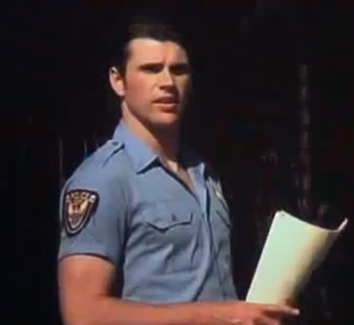 |
| Eddie played by Dylan Fergus |
As the film progress we are introduced to a Eddie a homosexual police officer, as you would aspect he is your stereotypical gay; camp, well groomed and within his police duties he pays special attention to men of the city.
Later on in the film Eddie and a group of friends are at the West Hollywood Halloween festival, on the way to the festival they are picked out by a psycho killer praying on homosexuals, this is important as the homosexual being the target of a crime of the crime is a convention of the queer theory.
Horror deconstruction 2 –Feminism film theory
The shining- https://www.youtube.com/watch?v=oip6YUn95ig

Woman is completely defenseless to child; she has a look of complete fear and helplessness.
The child is closer to the
screen than the mother to show that she has far less power than him.
The woman in this film is portrayed in the style of a feminism theory.

Playing to the stereotype of
the woman being weak and defenseless this is an important aspect of the genre
because the woman in a horror is the lady that will be chased and killed; also
she provides the crying and screaming to the horror which is a key convention
of horror
Horror Deconstruction- The Silence of the Lambs


In this scene the lighting is used to make a dark feel to the room and the way the light streaks past the body paints a sinister angelic mood to the location.


In the clip you can
clearly tell that the person displayed on screen is a murderer and probably a cannibal.
We can tell these things by the blood on his face and chest and also by the
half smile on his face displaying a sense of achievement towards his kill. The
camera then pans out to show the full extent of carnage in the room. The music
add a layer of sinister contrast to the visual display by presenting us with
The Goldberg Variations, a piece of classical music that would normal be used
to set a calm mood.
Subscribe to:
Posts (Atom)